
At Triare, sustainability is woven directly into our brand planning phase through the integration of AI-driven Virtual Sampling. By tracking real-world data from early-stage brands utilizing StyleAI, we calculate the exact resources saved per garment based on factory minimum order quantities (MOQs). This report proves that digital design directly reduces our carbon footprint long before production even begins.
1. Rigorous Planning and Its Hidden Environmental Cost
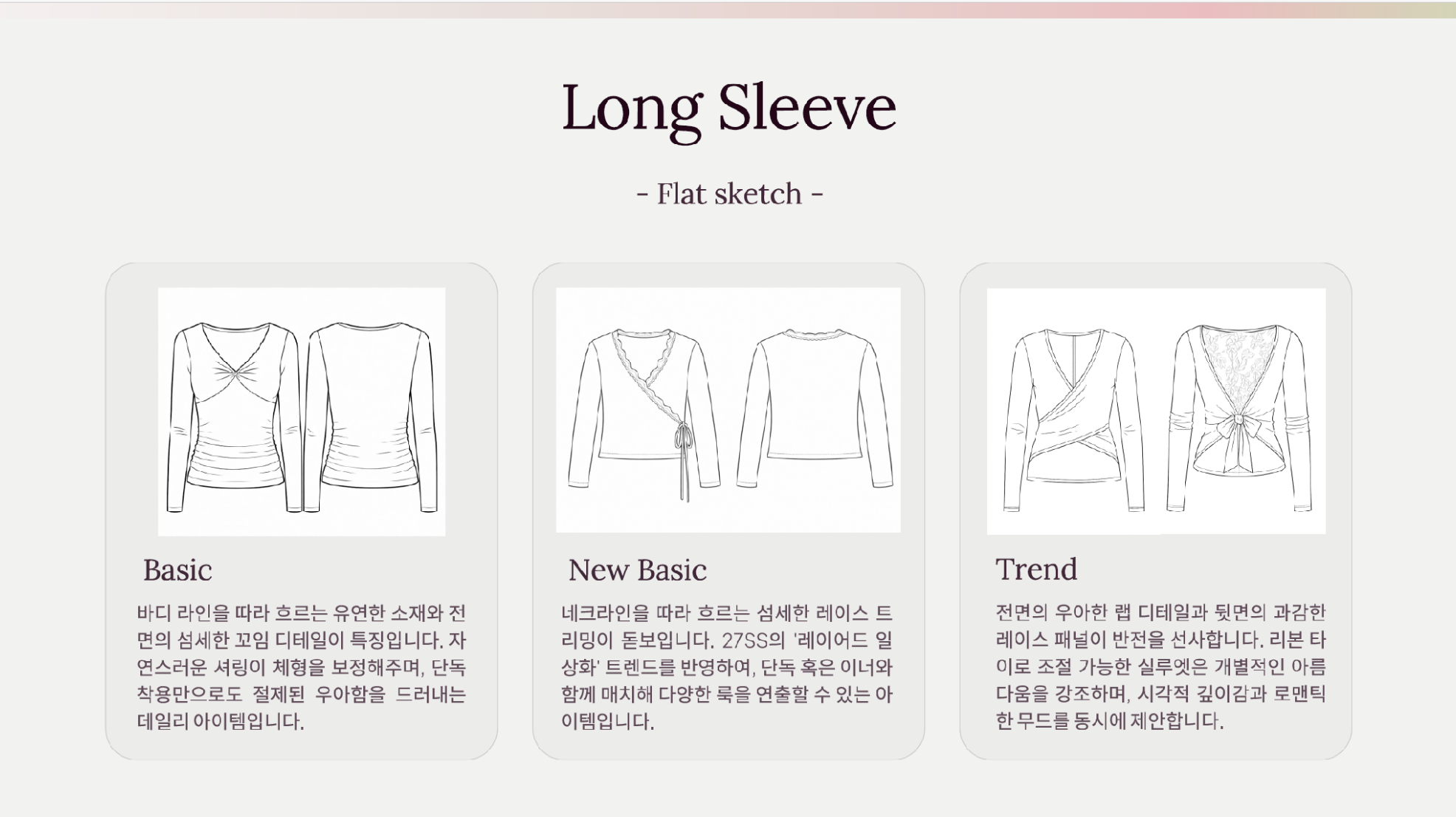
Achieving the perfect aesthetic for a minimalist, feminine look is a continuous journey of meticulous choices and structural refinements. To carefully calibrate detailed twists, ruching placements, and subtle variations in color chips, Triare utilized AI during the design planning phase to run virtual simulations for approximately 500 styles.
Through digital verification within this vast design reference pool, we successfully filtered the selection down to a refined group of 20 candidate styles.
[Triare's Design Planning Process]


In a traditional fashion design workflow, a brand would have to manufacture all 20 candidate styles into physical samples just to verify their fit and silhouette. As highlighted in the Root Impact Journal (Issue #220), the fashion industry accounts for nearly 10% of global greenhouse gas emissions, with sample waste and water pollution acting as heavy environmental burdens during early-stage development.
Triare, however, leveraged digital pre-verification to physically manufacture only the 6 core items of the collection. By establishing an efficient process where we check the market response to these main products before expanding the line, we successfully bypassed the physical production of 14 unnecessary samples, fundamentally cutting out waste right from our very first collection.
2. ESG Environmental Achievements via Virtual Sampling
To calculate our true net resource savings, we evaluated the reduction in physical samples (14 bypassed styles) against factory processing loads, while transparently deducting the energy consumed by the AI computing infrastructure to ensure a genuine Net-Zero calculation.

📄 References & Environmental Calculations
