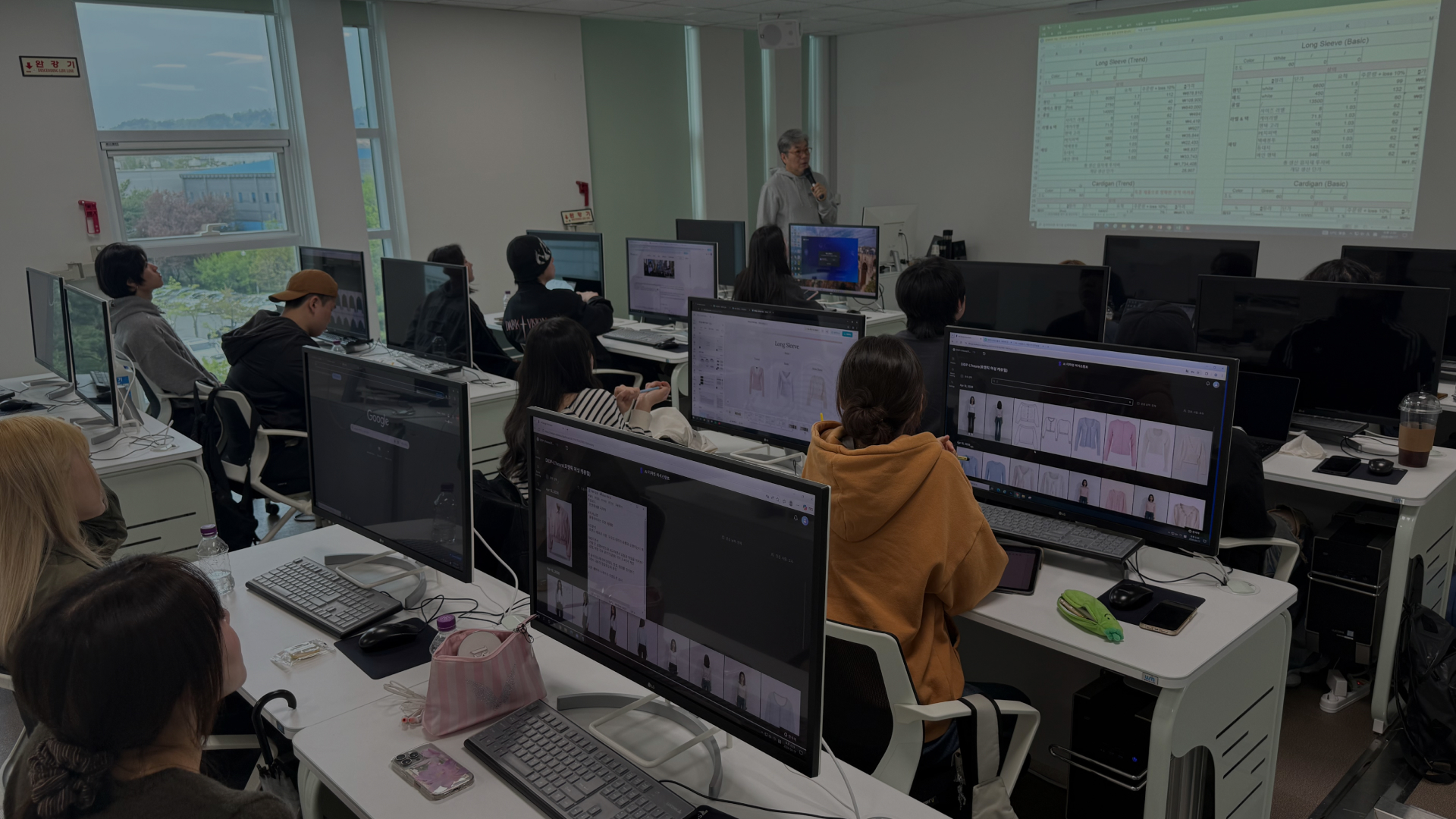

Daejeon Design Promotion Agency (DIDP) actively nurtures design-driven innovative startup teams and provides robust support for prototype manufacturing. To help early-stage fashion brand startups—who possess excellent creative concepts but lack professional production expertise—smoothly transition from initial design conceptualization straight into the physical manufacturing stage, DIDP implemented StyleAI’s fashion sketch generation (vector) solution.
For early-stage startup teams, the single largest barrier when communicating with manufacturing factories to create prototypes is the absence of professional technical documentation (Tech Packs).
Fashion brand startup teams supported by DIDP integrated StyleAI into their standard operational workflow, leveraging an end-to-end pipeline: Image to Sketch → Sketch Variation → Vector Export.
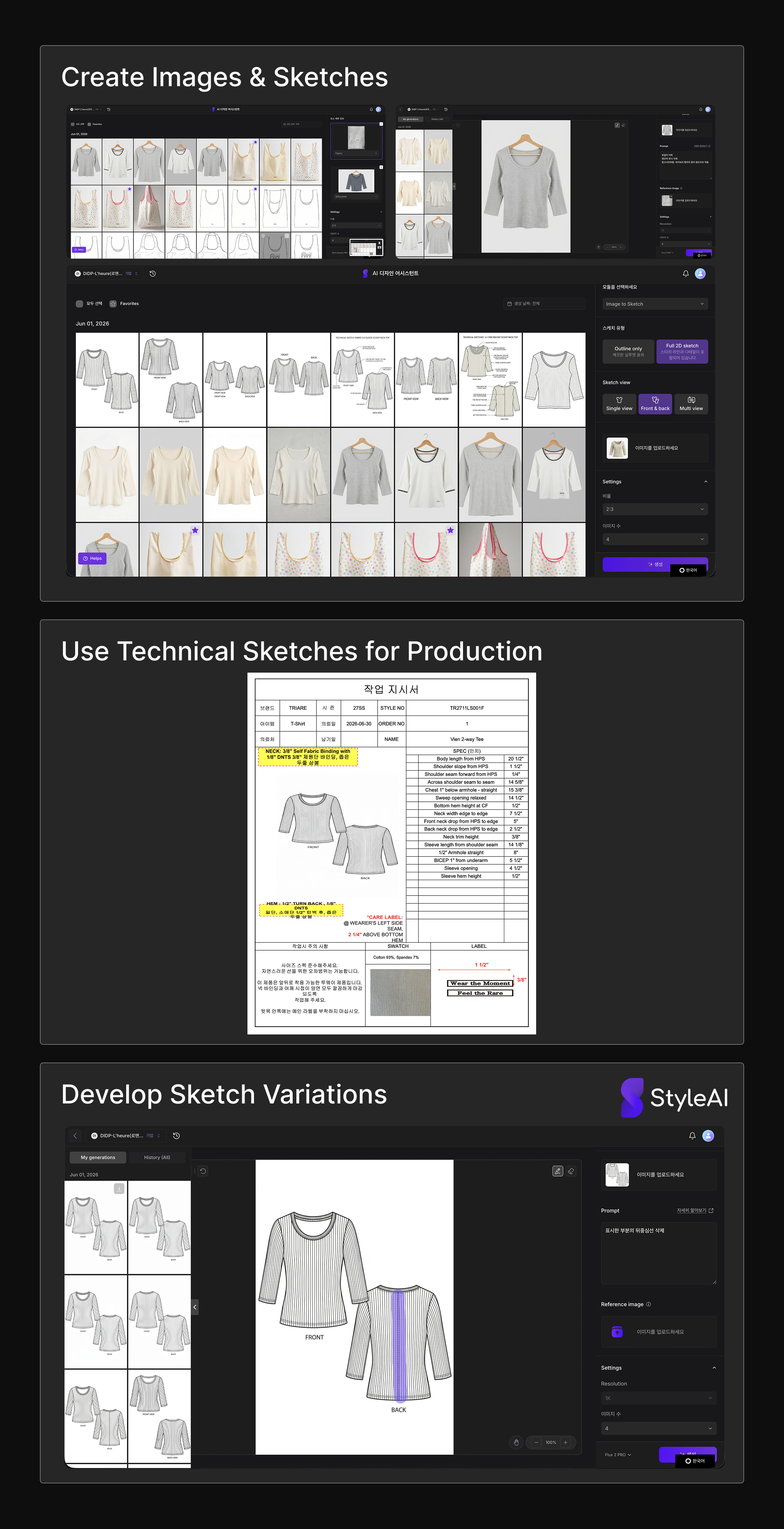
"Using StyleAI was incredibly helpful for rapidly visualizing the design concepts that previously only existed in my mind. Additionally, being able to effortlessly compare and review multiple styles side-by-side greatly informed our design direction. It allowed us to discover hidden details and design elements we hadn't previously considered, expanding our creative boundaries. In particular, the sketch-to-vector conversion feature ensured that we could manipulate images during revisions without any degradation in resolution, making it highly effective for actual design work. This solution substantially elevated our overall design completeness by letting us efficiently evaluate diverse possibilities in the earliest planning phases."
— Doyoung Ko, Senior, Department of Clothing and Textiles, Chungnam National University
"The inclusion of the product photo mix and AI variation features within the solution menu significantly alleviated the psychological burden of design planning. Furthermore, the flat sketch functionality—which supports exceptionally delicate stitch expressions—drastically minimized the time required to create tech packs. During revisions, the vector conversion tool allowed us to transition drawings directly into Adobe Illustrator files, enabling more precise, high-fidelity flat sketch workflows to complete our tech packs. Ultimately, we could clearly communicate the designer's true intent to the manufacturing facility by sharing photorealistic design images. Moreover, the 'Virtual Model Fitting' feature allowed us to verify garment fits in advance, accelerating final design confirmations and maximizing operational efficiency."
— Seoyeon Baek, Senior, Department of Clothing and Textiles, Chungnam National University
